Don't miss our Steel Supply Chain Services & Solutions!

Basic knowledge popularization of steel

The steel industry, as a pillar industry of China’s national economic development and an important raw material industry, has an undeniable important position. Moreover, China is the world’s largest producer and consumer of steel, and the investment and consumption driving force of the steel industry is enormous, with a high degree of correlation with other industries.
There are different types, types, shapes, and sizes of steel. All steel is composed of iron and carbon. The carbon content and other alloys determine the properties of each type of steel. According to the variety, steel can be divided into railway steel, long steel, wire, flat steel (also known as plate), and pipe; Classified by chemical composition, it is divided into non alloy steel, low-alloy steel, alloy steel, and stainless steel.
Classified by variety
- Railway steel: refers to the steel mainly used for production and construction by the railway department. Mainly including light rail, heavy rail, industrial steel rail, crane steel rail, conductive steel rail switch rail and other steel rails, as well as rail accessories such as fasteners, wheels, rims, axles and axle blanks. Among them, rails with a weight greater than 30 kg/m are heavy rails, and rails with a weight not greater than 30 kg/m are light rails.
2.Long material
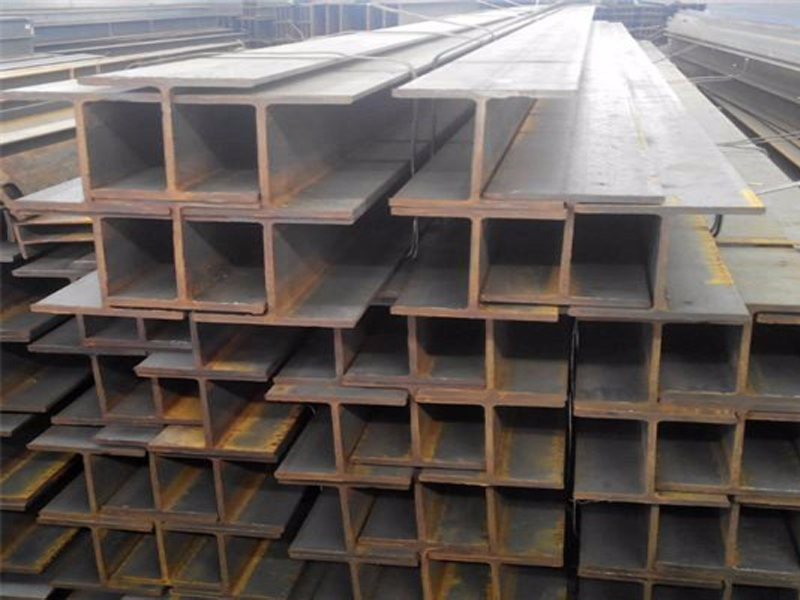
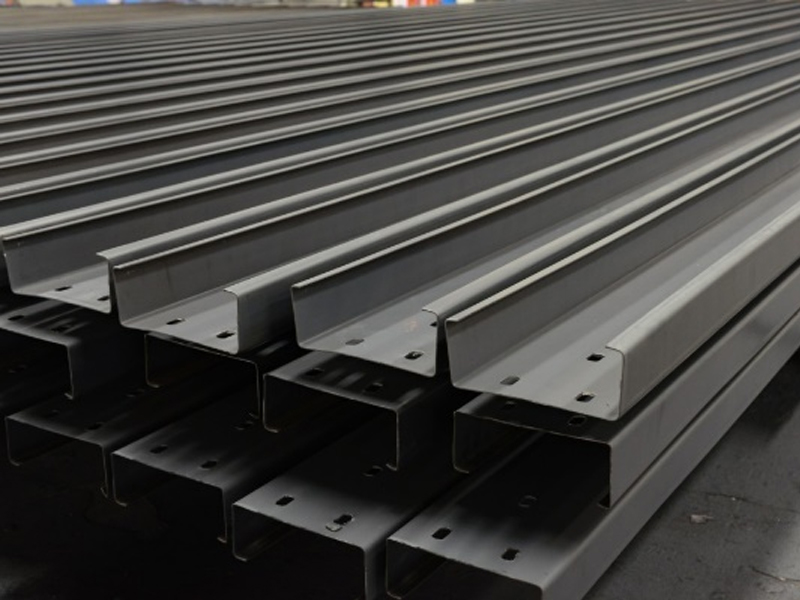
Section steel: Section steel refers to steel with complex cross-sectional shapes such as the letters H, 1, U, L, Z, T, etc. Divided into large section steel and small and medium-sized section steel according to cross-sectional height. Profiles are widely used in various sectors of the national economy, such as I-beams, which are mainly used in building components, bridge manufacturing, and shipbuilding; channel steel, which is mainly used in building structures and vehicle manufacturing; and window frame steel, which is mainly used in industrial and civil buildings. Among them, large section steel refers to section steel with a height of not less than 80 millimeters, and small and medium-sized section steel refers to section steel with a height of less than 80 millimeters.
Rod: Rod refers to steel with simple cross-sectional shapes such as circular, square, rectangular (including flat), hexagonal, octagonal, etc., usually delivered in straight bars, excluding concrete steel.
Reinforcement: Reinforcement refers to steel used for reinforced concrete and prestressed concrete. Its cross-section is circular, sometimes square with rounded corners. Usually delivered in straight bars, but does not include steel produced by wire mills. Divided by processing technology: hot-rolled steel bars, cold-rolled (drawn) steel bars, and other steel bars; Divided by variety: plain round steel bars, ribbed steel bars, and twisted steel bars. Divided by strength: Grade 1 (235MPa), Grade 2 (335MPa), Grade 3 (400Mpa), Grade 4 (590Mpa), and Grade 5 (1350Mpa) steel bars.
- Wire rod
Wire refers to steel that is rolled into a coil shape and delivered by a wire rolling mill, also known as wire rod. Wire with a carbon content of 0.6% or more is commonly known as hard wire and is commonly used as a raw material for products such as steel curtains, steel fibers, and steel strands. Wire with a carbon content below 0.6% is commonly known as soft wire. Wire is mainly used for construction and drawing steel wire and its products. Hot rolled wire rods are commonly used in the construction industry as round steel bars.
Wire can be divided into: wire for drawing, wire for mesh, wire for construction and other general purposes; According to rolling speed and coil weight, it can be divided into: general line, high line, and quasi high line: the high line rolling speed is between 100-120 m/s, and the quasi high line rolling speed is between 60-90 m/s; The weight of a regular coil is generally between 600-800 kilograms per coil, while the weight of a high coil is generally between 1.5-2 tons per coil
Old brand number: Common grades are generally divided into three types: Q195, Q215, and Q235, among which there are only two grades for construction steel wire rods, Q215 and Q235; For example: Q235 (Q refers to the yield strength of steel, 235 refers to a yield strength not less than 235Mpa). New brand: HPB195、HPB215、HPB235、HPB300, Among them, the construction steel plates include HPB215, HPB235, and HPB300, P: The meaning of light circle, B: Steel bar, 235: indicates a yield point of 235Mpa
- Flat material
Extra thick plate: refers to steel plates with a thickness of not less than 50 millimeters, generally produced by reversible hot-rolled extra thick plate mills, mainly used in boilers, shipbuilding, aviation, military defense, construction bridges, and containers.
Thick steel plate: refers to steel plates with a thickness of not less than 20 millimeters but less than 50 millimeters, generally produced by reversible hot-rolled medium thick plate rolling mills. It is mainly used in boilers, shipbuilding, aviation, military defense, construction, bridges, and containers.
Medium plate: Medium plate refers to a steel plate with a thickness of not less than 3 millimeters but less than 20 millimeters. It can be the shear product of hot-rolled strip produced by reversible hot rolling medium thick plate mills or continuous wide strip hot rolling mills, and its thin specification products can also be processed by cold rolling mills. Medium plates are mainly used for boilers, shipbuilding, train carriages, containers, and military defense Buildings, bridges, and containers, etc
Thin plate refers to a single steel plate with a thickness of less than 3 millimeters. Thin plates are divided into hot-rolled thin plates and cold-rolled thin plates according to the rolling process, including those produced by single sheet rolling and those produced by cutting wide steel strips into single sheets. Mainly used in automobiles, shipbuilding, machinery, enamel, containers, construction, home appliances, furniture, agricultural machinery, and containers.
Hot rolled thin plates are usually produced by continuous wide strip mills, furnace coil mills, and thin slab continuous casting and rolling equipment. The hot-rolled wide strip steel is obtained by shearing. The production process of hot-rolled thin plates using single sheet production or stacked rolling is considered an obsolete process.
Cold rolled thin plates are usually produced by single sheet rolling using reversible cold rolling mills, or by shearing cold-rolled wide strip steel produced by reversible cold rolling mills or continuous wide strip steel cold rolling mills
Medium thick and wide steel strip: refers to a steel strip with a thickness of not less than 3 millimeters and a width of not less than 600 millimeters, produced and delivered in roll form using equipment such as continuous wide strip hot rolling mills or furnace coiling mills.
Hot rolled thin and wide steel strip: refers to steel strip with a thickness of not less than 3 millimeters and a width of not less than 600 millimeters, produced and delivered in coils using continuous wide strip hot rolling mills, furnace coil mills, or thin slab rolling equipment.
Cold rolled thin and wide steel strip refers to a steel strip with a thickness of not less than 3 millimeters and a width of not less than 600 millimeters. It is usually produced and delivered in coils using equipment such as continuous wide strip cold rolling mills or reversible cold rolling mills.
Hot rolled narrow steel strip refers to a steel strip with a width of not less than 600 millimeters, usually produced by equipment such as hot rolling strip mills or obtained by longitudinal cutting of hot-rolled wide steel strip, and usually delivered in coils.
Cold rolled narrow steel strip refers to a steel strip with a width of not less than 600 millimeters, usually produced by equipment such as cold rolling mills or obtained by longitudinal cutting of cold-rolled wide steel strip, and usually delivered in coils.
Coated plate (strip): refers to steel with a layer of metal coated on the surface of the base plate (strip). Galvanized sheet refers to a steel plate coated with a layer of zinc on its surface. Galvanized sheet is divided into hot-dip galvanized sheet and electroplated galvanized sheet according to the production process. The zinc layer thickness of hot-dip galvanized sheet is relatively thick, which is used for components with strong corrosion resistance. The zinc layer thickness of electroplated galvanized sheet is thin and uniform, and it is often used for painting or indoor use.
Tinplate, commonly known as tinplate, refers to a steel plate coated with a thin layer of metallic tin on its surface. It has good corrosion resistance, certain strength and hardness, good formability, and is easy to weld. Tin layer is non-toxic and odorless, can prevent iron from dissolving into the packaged material, and has a bright surface. Printing pictures can beautify products, mainly used in the food canning industry, and secondly used in packaging materials such as chemical paints, oils, and pharmaceuticals. Tin plated plates are divided into hot-dip tin plated plates and electroplated tin plated plates according to production processes.
Coated board (with)
It refers to products obtained by using galvanized sheet, aluminum plated sheet, galvanized aluminum alloy sheet, cold-rolled sheet, etc. as the base material, coating the surface with one or two layers of organic coatings (such as epoxy vinegar, polyacrylic acid, acrylic acid, plastic sol, etc.), or applying a layer of plastic film. Due to its ability to produce different colors or embossed patterns, it is also called colored steel plate. This type of steel plate is widely used in industries such as construction, transportation, containers, light industry, electrical appliances, furniture, and instrumentation.
Electrical steel plate (strip)
Electrical steel plate, also known as silicon steel sheet, refers to a type of silicon iron soft magnetic alloy with extremely low carbon content (after annealing, the carbon content is below 0.005%), generally with a silicon content of 0.5% -4.5%. Adding silicon to iron can increase its electrical resistivity and magnetic permeability. Electrical steel plates are mainly used to manufacture iron cores for various transformers, generators, and generators.
Electrical boards are divided into two categories, namely oriented electrical steel plates and non oriented electrical steel plates. Oriented electrical steel plate refers to an electrical steel plate with a certain grain orientation. The rolling magnetic properties of this electrical steel plate are significantly better than the transverse ones, mainly used for transformers and produced using cold rolling technology. Non oriented electrical steel plate refers to an electrical steel plate with randomly oriented grains. The rolling direction and transverse magnetism of this electrical steel plate are roughly the same, mainly used for motors.
- Pipe material: Steel pipe refers to a steel material with open ends and a hollow cross-section, and its length is relatively large compared to the surrounding area. According to the processing technology, it can be divided into seamless steel pipes and welded steel pipes. The production methods mainly include hot rolling, cold rolling, extrusion cold drawing, forging, welding, etc. Its specifications are expressed in terms of external dimensions (including outer diameter or side length) and wall thickness, with a wide range of sizes and extremely versatile applications.
Seamless steel pipe: refers to a steel pipe made of a single piece of metal with no joints on the surface
Welded steel pipe: refers to a steel pipe with joints on its surface, which is formed by bending and deforming steel strips or plates into expected shapes such as circles or squares, and then welding them together.