Don't miss our Steel Supply Chain Services & Solutions!

Common steel models and performance characteristics!

45- High quality carbon structural steel is the most commonly used medium carbon quenched and tempered steel.
Main features: The most commonly used medium carbon quenched and tempered steel has good comprehensive mechanical properties, low hardenability, and is prone to cracking during water quenching. Small parts should be treated with quenching and tempering, while large parts should be treated with normalizing. Application examples: Mainly used for manufacturing high-strength moving parts, such as turbine impellers and compressor pistons. Shaft, gear, rack, worm gear, etc. Pay attention to preheating before welding and stress relief annealing after welding for welded parts.
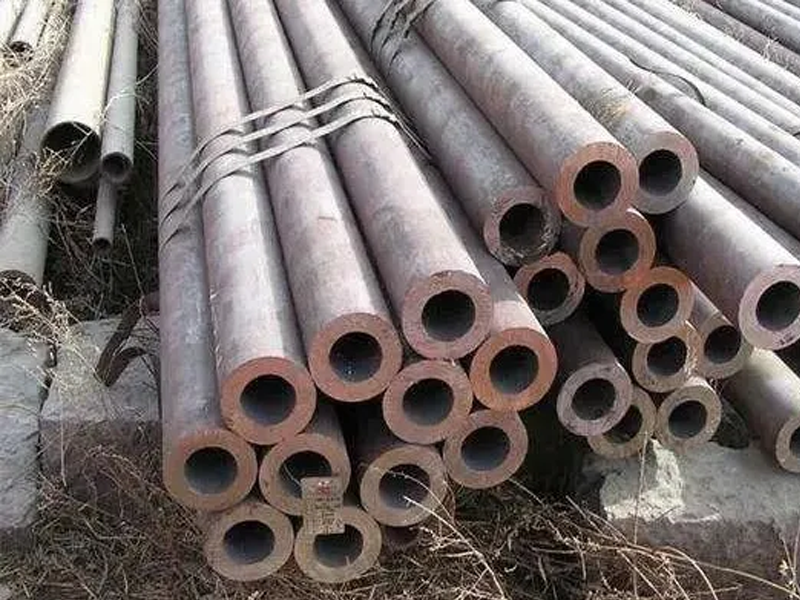
Q235A (A3 steel) – the most commonly used carbon structural steel.
Main features: high plasticity, toughness, welding performance, cold stamping performance, as well as certain strength and good cold bending performance. Application example: Widely used for general requirements of parts and welding structures. Such as tension rods, connecting rods, pins, shafts, screws, nuts, rings, brackets, machine bases, building structures, bridges, etc. that do not experience significant force.
40Cr – one of the most widely used steel grades, belonging to alloy structural steel.
Main features: After quenching and tempering treatment, it has good comprehensive mechanical properties, low temperature impact toughness, and low notch sensitivity. It has good hardenability and can achieve high fatigue strength when cooled in oil. Complex shaped parts are prone to cracking when cooled in water, with moderate cold bending plasticity. After tempering or quenching, it has good machinability, but poor weldability and is prone to cracking. It should be preheated to 100-150 ℃ before welding and is generally used in quenched and tempered state. Carbon nitrogen co diffusion and high-frequency surface quenching treatment can also be carried out.
Application examples: After quenching and tempering treatment, it is used to manufacture medium speed and medium load parts, such as machine tool gears, shafts, worms, spline shafts, thimble sleeves, etc. After quenching and high-frequency surface quenching, it is used to manufacture high hardness and wear-resistant parts, such as gears, shafts, spindles, crankshafts, spindles, sleeves, pins, connecting rods, screws and nuts, intake valves, etc. After quenching and medium temperature tempering, it is used to manufacture heavy-duty and medium speed impact parts, such as oil pump rotors, sliders, gears, spindles, collars, etc. After quenching and low-temperature tempering, it is used to manufacture heavy-duty, low impact, wear-resistant parts, such as worms, spindles, shafts, collars, etc. The carbon nitrogen co diffusion area is used to manufacture large-sized and low-temperature impact toughness transmission parts, such as Axes, gears, etc.
HT150- Grey cast iron, application examples: gearbox body, machine tool bed, casing, hydraulic cylinder, pump body, valve body, flywheel, cylinder head, pulley, bearing cover, etc
35- Common materials for various standard components and fasteners
Main features: appropriate strength, good plasticity, high cold plasticity, and acceptable weldability. Local upsetting and drawing can be performed in the cold state. Low hardenability, suitable for manufacturing small section parts that can withstand large loads, such as crankshafts, levers, connecting rods, hooks and rings, various standard parts, fasteners, etc
65Mn – commonly used spring steel
Application examples: Various small-sized flat and round springs, seat cushion springs, spring springs, can also be used to make spring rings, valve springs, clutch springs, brake springs, cold coil springs, snap springs, etc.
0Cr18Ni9- The most commonly used stainless steel (US grade 304, Japanese grade SUS304)
Characteristics and Applications: As a stainless and heat-resistant steel, it is widely used in food equipment, general chemical equipment, and industrial equipment
Cr12- commonly used cold work die steel (US steel grade D3, Japanese steel grade SKD1)
Features and Applications: Cr12 steel is a widely used cold work die steel, belonging to the high carbon and high chromium type of martensitic steel. This steel has good hardenability and wear resistance; Due to the high carbon content of 2.3% in Cr12 steel, its impact toughness is poor, it is prone to brittle fracture, and it is also prone to the formation of uneven eutectic carbides; Cr12 steel, due to its excellent wear resistance, is commonly used in the manufacture of cold stamping dies, punches, cutting dies, cold heading dies, cold extrusion dies with high wear resistance and low impact loads, as well as punch and die dies, drill sleeves, gauges, wire drawing dies, embossing dies, wire rolling plates, deep drawing dies, and cold pressing dies for powder metallurgy
DC53- Commonly used Japanese imported cold work die steel
Characteristics and Applications: High strength and toughness cold work die steel, produced by Daido Special Steel Co., Ltd. in Japan. After high-temperature tempering, it has high hardness, high toughness, and good wire cutting performance. Used for precision cold stamping dies, stretching dies, wire rolling dies, cold punching dies, punches, etc. 10, SM45- ordinary carbon plastic mold steel (Japanese steel grade S45C)
DCCr12MoV – Wear resistant chromium steel (domestic)
Compared with Cr12 steel, it has a lower carbon content and the addition of Mo and V improves the unevenness of carbides. MO can reduce carbide segregation and improve hardenability, while V can refine grains and increase toughness This steel has high hardenability, with a cross-section of less than 400mm that can be completely quenched. It can still maintain good hardness and wear resistance at 300-400 ℃, and has higher toughness than Cr12. The volume change during quenching is small, and it has high wear resistance and good comprehensive mechanical properties The WeChat content for metal processing is good and worth paying attention to.
So it is possible to manufacture various molds with large cross-sections, complex shapes, and withstand large impacts, such as ordinary stretching molds, punching dies, punching dies, blanking dies, cutting dies, rolling dies, drawing dies, cold extrusion dies, cold cutting scissors, circular saws, standard tools, measuring tools, etc.
SKD11- Tough Chromium Steel (produced by Hitachi, Ltd. in Japan)
Technically improved the casting structure in steel and refined the grain size The toughness and wear resistance have been improved compared to Cr12mov Extended the service life of the mold
D2- High Carbon and High Chromium Cold Working Steel (Made in the United States)
It has high hardenability, hardenability, wear resistance, good high-temperature oxidation resistance, good rust resistance after quenching and polishing, small heat treatment deformation, and is suitable for manufacturing various cold work molds, cutting tools, and measuring tools that require high precision and long service life, such as stretching molds, cold extrusion molds, cold shear knives, etc.
SKD11 (SLD) – High chromium steel with non deformable toughness Produced by Hitachi, Ltd. in Japan
Due to the increase in MO and V content in steel, the casting structure of the steel is improved, the grain size is refined, and the morphology of carbides is improved. Therefore, the strength and toughness (bending strength, deflection, impact toughness, etc.) of this steel are higher than those of SKD1 and D2, and the wear resistance is also increased. Moreover, it has higher resistance to backfire Practice has proven that the service life of this steel mold is improved compared to Cr12mov We often manufacture molds with high requirements, such as stretching molds, impact grinding wheel molds, etc.
DC53- High toughness and high chromium steel, produced by Daido Co., Ltd. in Japan
The hardness after heat treatment is higher than SKD11. After high-temperature (520-530) tempering, it can reach 62-63HRC high hardness, and DC53 exceeds SKD11 in strength and wear resistance. The toughness is twice that of SKD11 The toughness of DC53 rarely results in cracks and fissures in cold work mold manufacturing Greatly improves the service life Low residual stress Reduce residual stress by turning back at high temperature Because cracks and deformations are suppressed after wire cutting processing Cutting and grinding properties exceed SKD11. Used for precision stamping dies, cold forging, deep drawing dies, etc
SKH-9- a universal high-speed steel with high wear resistance and toughness Produced by Hitachi, Ltd. in Japan Used for cold forging dies, cutting machines, drills, reamers, punches, etc.
ASP-23- Powder metallurgy high-speed steel, produced in Sweden The distribution of carbides is extremely uniform, wear-resistant, high toughness, easy to process, and the size is stable after heat treatment Used for various long-life cutting tools such as punch heads, deep drawing dies, drill dies, milling cutters, and shear blades.
P20- Generally required size plastic molds, made in the United States Electrical erosion operation is possible Pre hardened HB270-300 in factory condition. Quenched hardness HRC52.
718- High demand plastic molds of various sizes, produced in Sweden Especially in the process of electroerosion Pre hardened HB290-330 in factory condition Quenching hardness HRC52
Nak80- High mirror finish, high-precision plastic mold, produced by Daido Co., Ltd. in Japan Pre hardened HB370-400 in factory condition. Quenching hardness HRC52
S136- Anti corrosion and mirror polished plastic mold, produced in Sweden Pre hardened HB<215 in factory condition. Quenched hardness HRC52.
H13- a commonly used die-casting mold for aluminum, zinc, magnesium, and alloy die-casting Hot stamping die, aluminum extrusion die,
SKD61- Advanced Die Casting Mold, produced by Hitachi, Japan, with electric slag remelting technology, has significantly improved service life compared to H13 Hot stamping die, aluminum extrusion die,
8407- Advanced die-casting mold, produced in Sweden Hot stamping die, aluminum extrusion die.
FDAC – with added sulfur to enhance its machinability, the factory pre hardness is 338-42HRC, which can be directly engraved without quenching or tempering treatment Used for small batch molds, simple molds, various resin products, sliding parts, and mold parts with short lead times Zipper mold, eyeglass frame mold.